

Love Colors Guide
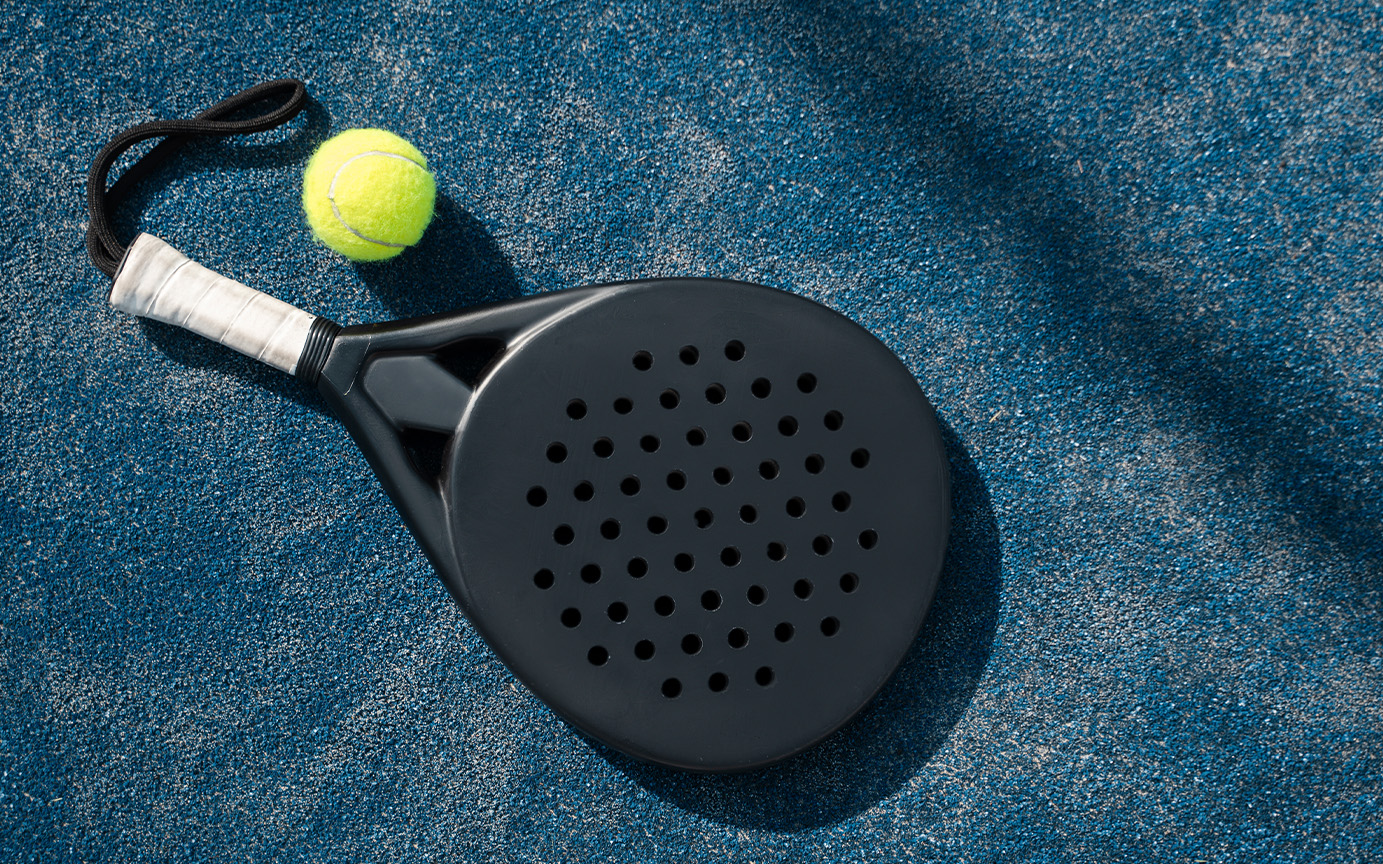
Padel is an exciting sport that has experienced incredible growth in recent years, and choosing the right racket is essential to enjoying it to the fullest. At Love Colors, we understand that there is no such thing as a perfect racket for everyone: the best racket for you will depend on your level of play, your style, and your goals on the court.
In this guide, we explain how to select the best padel racket for your level (beginner, intermediate, advanced) and your playing style (control, power, versatile). We also give you tips to help you make an informed and confident decision.
1. Why is it important to choose the right padel racket?
Choosing the right paddle tennis racket is not just a matter of aesthetics: it has a direct impact on your performance, comfort, and injury prevention. If you use the wrong racket, you may feel uncomfortable, have less control on the court, or even strain your arm. On the other hand, a well-chosen racket allows you to maximize your game, gain confidence, and, most importantly, enjoy every point.
In addition, the market offers a wide variety of rackets with different shapes, weights, materials, and balances, so it is essential to know what features matter in order to find the one that best suits you.
2. Key factors for choosing your racket: skill level vs. style
When selecting a racket, it is important to consider two main factors:
Your skill level: beginner, intermediate, or advanced.
Your playing style: defensive (control), offensive (power), or versatile.
For each of these profiles, certain aspects of the racket will be more relevant: the shape of the head, the weight, the balance, the hardness of the core, and the materials. Let’s take a closer look.
3. By skill level: which racket is right for you?
3.1 Beginner level
If you are just starting out in padel, your priorities should be comfort, control, and ease of hitting.
Shape: a round racket is recommended, as it offers a wide sweet spot and greater tolerance for errors.
Weight: lighter rackets (for example, between 340g and 360g) are more maneuverable, reduce fatigue, and are less demanding on the arm.
Balance: low or medium, for good control.
Materials: fiberglass rackets are a good choice at first because they are more flexible and absorbent.
Core: soft EVA rubber provides comfort, absorbs vibrations, and forgives off-center hits.
With these features, you can focus on developing your technique without sacrificing accuracy or risking injury.
3.2 Intermediate level
Once you have some experience, know the basic strokes, and want to progress, it’s time to look for a more balanced racket:
Shape: a teardrop-shaped racket is highly recommended because it combines power and control.
Weight: a medium range (for example, between 360 g and 380 g) gives you more stability without sacrificing maneuverability.
Balance: medium, so you can switch between defense and attack smoothly.
Core feel: a feel that is neither too soft nor too hard (“medium”) will give you a balanced ball release.
Materials: you can combine fiberglass with some carbon to gain stiffness, durability, and greater response without losing too much comfort.
This type of racket is ideal if you alternate between playing with control from the baseline and decisive attacks.
3.3 Advanced level
If you play frequently, compete, or simply have a solid technique, you are probably looking for power, precision, and high performance.
Shape: diamond-shaped rackets offer more power, although their sweet spot is usually smaller.
Weight: heavier (for example, 370 g and up, depending on the brand) for more inertia on shots.
Balance: high (weight concentrated towards the head) to favor power on shots.
Core: harder rubber, which provides a more explosive response on impact.
Materials: carbon fiber (or advanced blends) for stiffness, durability, and energy transfer.
With these paddles, you can maximize your power—but it’s important to have good technique to control it effectively.
4. According to your playing style: control, power, or versatile
In addition to your level, your playing style is key to deciding which racket is best for you.
4.1 Defensive player – control
If your style is more measured, you focus on returning balls, placing shots, and building points:
You need a racket with control as a priority: round or teardrop shape, medium or low balance.
Prefer a soft feel to absorb vibrations and facilitate placement.
Flexible or moderately rigid materials (fiberglass, soft cores) will help you maintain accuracy.
4.2 Offensive player – power
If you like to smash, win at the net, and finish points with power:
Choose rackets with power: diamond shape, high balance.
Hard feel for a strong response on every shot.
Rigid materials (carbon, composite materials) that transmit energy well.
Hard core to maximize ball output.
4.3 Versatile player – mixed
Many players alternate between defense and attack, so they need a versatile racket:
Ideally, a soft teardrop or hybrid shape that combines control and power.
Medium balance to get the best of both worlds.
Medium feel: neither too soft nor too hard, to adapt to different phases of the game.
Mixed materials (fiber + carbon) that provide versatility and balanced performance.
5. Other important factors to consider
Beyond level and style, there are other technical aspects to consider:
5.1 Weight vs. comfort
Although a heavy racket can provide more power, it also requires more technique and can be tiring. Lightweight rackets are more comfortable, especially for less experienced players or for long sessions.
5.2 Balance
Balance (weight distribution) is crucial: a high balance gives power, a low balance gives more control, and a medium balance gives you versatility.
5.3 Core hardness (feel)
Soft core: greater absorption, more comfortable, ideal for control and beginners.
Hard core: more energy, more response, better for offensive power.
5.4 Materials
Fiberglass: flexible, forgives mistakes, good option for those who prioritize control.
Carbon: rigid, more durable, more power.
There are also intermediate materials and modern composites that combine the best of both worlds.
5.5 Sweet spot
The size and location of the sweet spot depend on the shape of the racket. On a round racket, it is usually large, which makes it easier to hit off-center shots; on a diamond racket, it is smaller but provides more power.
5.6 Testing and personal feelings
Beyond the numbers, the most important thing is how the racket feels in your hand. In many stores (physical or specialized online stores), you can try out several rackets before deciding.
In addition, your personal feel will tell you if the racket is too stiff, too heavy, or if the sweet spot doesn’t convince you. This is something that cannot be appreciated from the specifications alone, but only on the court.
6. Common mistakes when choosing a racket
With these recommendations, you can avoid some common mistakes:
Choosing based on price alone: The most expensive option is not always the best for you. What matters is how well it suits your level and style.
Ignoring balance and weight: Not taking these variables into account can lead to a racket that is difficult to handle or lacks power.
Not testing the racket: Buying without testing can lead to disappointment. Whenever possible, play with several rackets.
Not taking your physique or possible discomfort into account: For example, if you have elbow or wrist problems, a racket that is too stiff or heavy can make the situation worse.
Forgetting your playing style: Not all rackets are suitable for all styles; a powerful racket will not help you if what you need is control, and vice versa.
7. Additional tips for making the right choice
Consult with a coach or experienced player: If you have doubts, they can guide you based on your actual playing style.
Consider your physical condition: If you play for many hours or suffer from fatigue, a lighter racket or one with a soft core may be better.
Check durability: Choose rackets made of materials that are suitable for how often you play.
Think long term: It is not always necessary to change rackets every season. If you are progressing, you may want to consider a new racket, but with a good initial choice, you can play for years with the same one.
Choosing the best padel racket is not a trivial decision, but it doesn’t have to be frustrating either. With Love Colors’ guide, you have the resources to find a racket that fits your level, style, and aspirations. Remember:
Define your level of play (beginner, intermediate, advanced).
Identify your style (defensive, offensive, versatile).
Consider technical factors: shape, weight, balance, feel, materials.
Try it out if you can and trust your instincts.
Avoid common mistakes and take advantage of the tools in our store to make an informed decision.
At Love Colors, we are as passionate about padel as you are, and we want to help you find the perfect racket so you can enjoy every match to the fullest. With the right racket in your hand, you will not only improve your game, but you will also feel more confident, efficient, and comfortable on the court.

Leave a Comment
Your email address will not be published. Required fields are marked *